We Are What We Do: Habits, Identity, and Lasting Change
Why lasting habits are less about goals and more about who we see ourselves to be.
Habits Beyond Outcomes
Habits rule our lives. They shape almost everything we do. Most of our day runs on autopilot due to the habits we have built. This has elements of good and bad news in it. Let’s focus on the good news, where positive habits can carry us forward.
When some people think about habits, the focus is on outcomes. They want to lose weight, read more, or get better at what they do. In this way, habits are seen as a tool to get someplace. With the conversation set on outcomes and productivity, let’s look at something deeper.
In an earlier reflection on the no instruction manual to productivity, the idea was that true breakthroughs rarely come from rigid steps and external hacks. They arrive when the mind is free and unforced. This piece builds on that thought by exploring how productivity and change emerge more naturally when anchored in identity.
The Power of Identity
James Clear in Atomic Habits reminds us that change does not just come from chasing goals. It comes from aligning habits with identity. Instead of asking “what do I want to achieve,” the more powerful question becomes “who do I need to become in order to achieve those goals.”
Every small action becomes a vote for the identity being built. Writing a page is not just a task; it is a step toward being a writer. Going to the gym, even briefly, confirms the identity of being someone who values health. Each action reinforces the kind of person one believes themselves to be.
Aristotle captured this truth centuries ago when he said, “We are what we repeatedly do. Excellence, then, is not an act, but a habit.” In other words, identity is not separate from our habits; it is revealed by them. And when our habits align with our identity, productivity is no longer forced — it becomes the natural outcome of who we are.
Habits and Identity Reinforce Each Other
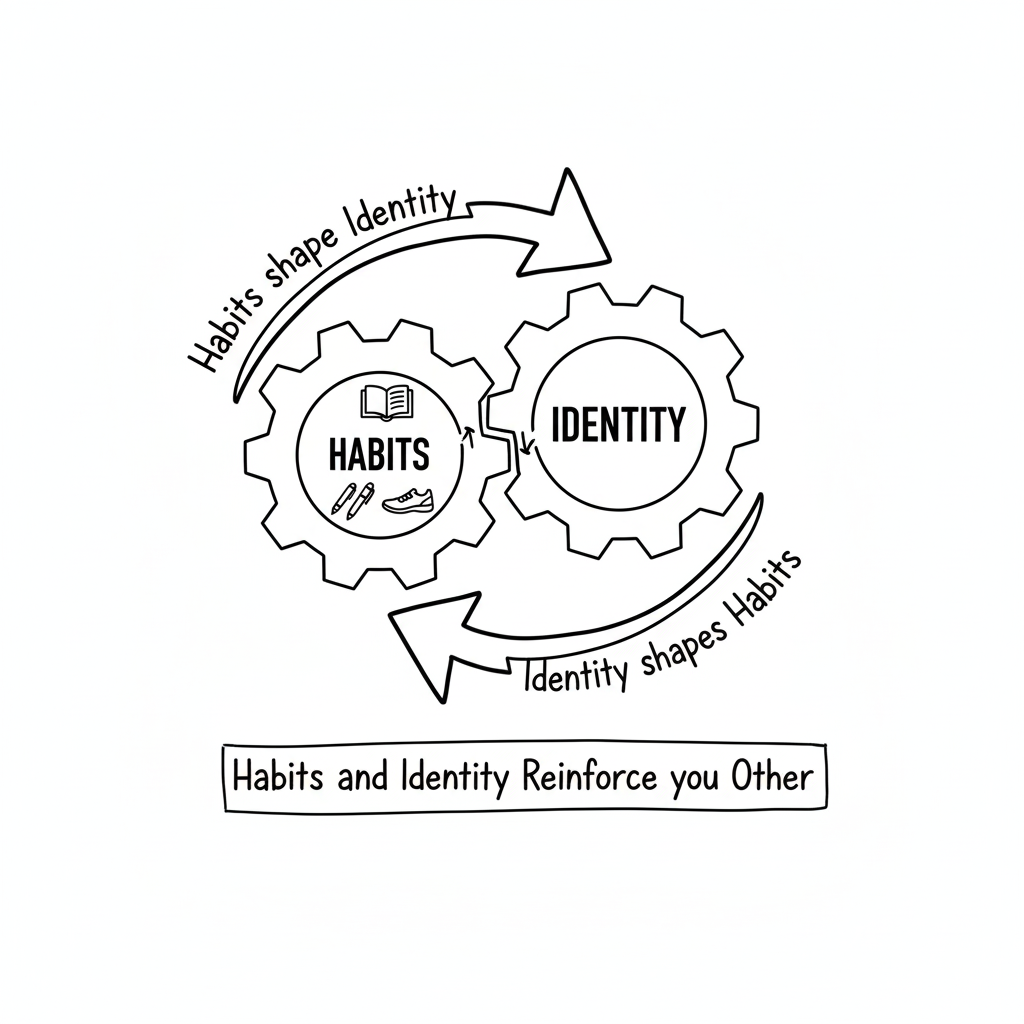
There is also a feedback loop at work. Identity shapes habits, and habits strengthen identity. Repeated actions serve as quiet reminders of who we are becoming. Over time, these reminders settle into belief.
As both philosophers and modern thinkers remind us, our habits are nothing more than daily expressions of the identity we carry within. And when those expressions are consistent, productivity stops being a struggle with willpower and becomes a rhythm that sustains itself.
This is why goals by themselves can feel fragile. A person who only wants to quit smoking may fight temptation each day. But someone who begins to believe “I am not a smoker” finds the habit change anchored in identity, not in sheer resistance.
A Broader Perspective
Habits are not only about results. They are about becoming someone new, one small choice at a time.
Change does not happen in sudden leaps but in the quiet consistency of aligning action with identity. Each decision is like a thread, and over time those threads weave the fabric of who we become. When seen this way, habits stop being small struggles and start becoming daily affirmations of the life we want to live.
This is where lasting change is found — not in chasing short-term goals, but in creating an identity that makes those goals inevitable.
In the end, identity is both the foundation and the destination. We do not rise to the level of our goals, we fall to the level of our identity. And as each habit takes root, it becomes less about discipline and more about truth. In the end, we can only act in line with who we are.
So the access to productivity and performance here is simple: you do you. Work and create habits in alignment with who you identify yourself to be. And if that identity no longer serves, create a new way of seeing yourself, a new way of being, and let your actions flow from there.