Productivity is that elusive thing in our stressed out world, everyone claiming to know what it is while not many having a clue on what triggers it. There are many hacks and how to’s written about them. Heck, we live in a world obsessed with instructions, on what to do and how to get breakthroughs in productivity. The so-called productivity hacks abound telling us what to do in the varied situations at work and at life in general. Yet when we stop to think about it, our biggest breakthroughs rarely come when someone is telling us what to do. It doesn’t come when we are forcing our brain to think harder, try harder. They come at the most unexpected moments when we are least thinking about them. I have spent some time trying to figure out what works in this area and would like to share some learnings.
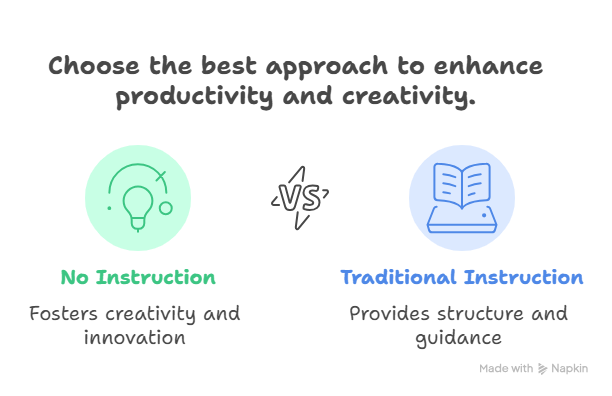
Nassim Taleb’s Wisdom:
‘Your brain is most intelligent when you don’t instruct it on what to do – something people who take showers discover on occasion” – Nassim Nicholas Taleb in Bed of Procrustes
The above quote from my favorite author has a lot of insights and points to something fundamental about human intelligence. Its paradoxical but our minds work best when not over managed or over instructed on what to do. Think about moments of insight in your life. They arrive unannounced, often after we have stopped ‘trying’.
Focus vs Diffuse modes of thinking
This echoes the focus vs diffuse method of learning, highlighted in the book, A mind for numbers, by Barbara Oakley.
Focus mode is when we consciously direct attention – solving math problems, coding or analyzing data.
Diffuse method is when the mind relaxes, wandering freely, making unexpected connections – often while walking, showering etc.
Seen from this lens, breakthroughs in productivity can come from a combination of the focus and diffuse modes of work. They arise when the 2 modes work together, we engage in deeply focused work, then release into diffuse mode to let connections form.
Ontology: The Study of being
Bear with me as I bring in the field of ontology, the ‘study of being’ into this discussion. Ontology teaches that ‘being’ shapes the ‘doing’ . In effect, shifting how we are being, a different set of actions emerge. Instead of asking what should I do, the ontological perspective says ‘who am I being right now that determines what I do? Ontology holds that actions are a natural self expression of one’s state of being.
The Flow state:
Without getting into another book, Flow, maybe another topic once I read that book fully and can connect to this blog as a series. For now, let’s look at a combination of the points we discussed. When we see that the brain is most intelligent without instructions and ontology gives an insight that actions flow from the shift in our being, we get to the flow.
In flow, the mind can balance focus and openness. The self is not blocked by doubt or fear. It expresses itself freely. We are in action producing results almost effortlessly and even surprising ourselves with creativity. Breakthroughs often feel like they ‘just happened’ or we dismiss it as ‘just good fortune’. It was the result of letting the mind and our being sync. When we stop over managing both our thoughts and our self, we unlock a state where ideas, insights and actions emerge with ease.
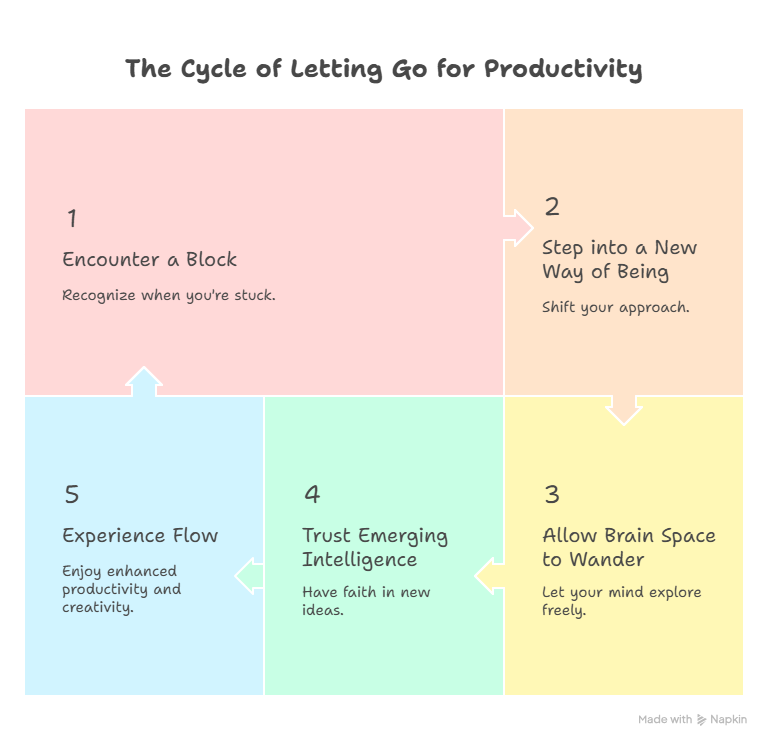
So let me offer my contribution to the set of productivity hacks from the above, the next time you find yourself stuck, don’t push harder. Step into a new way of being. Give you brain space to wander. Trust the intelligence that emerges when you let go. You may find that productivity and creativity flow more easily than you ever imagined.
Comments
One response to “The No instruction way to productivity”
[…] set on outcomes and productivity, let’s look at something deeper.In an earlier reflection on the no instruction manual to productivity, the idea was that true breakthroughs rarely come from rigid steps and external hacks. They arrive […]