Why emptiness is the forgotten ingredient of creativity and productivity
We often think of creativity as something we add. More ideas, more input, more inspiration. Productivity too feels like a matter of doing more, of optimizing every minute. Yet the more we try to fill our days, the less room we leave for what truly matters. And what truly matters often comes in the quiet moments where ideas are born. In the rush to become more creative, we’ve forgotten that creation begins in emptiness.
There’s an old Zen story that captures this truth.
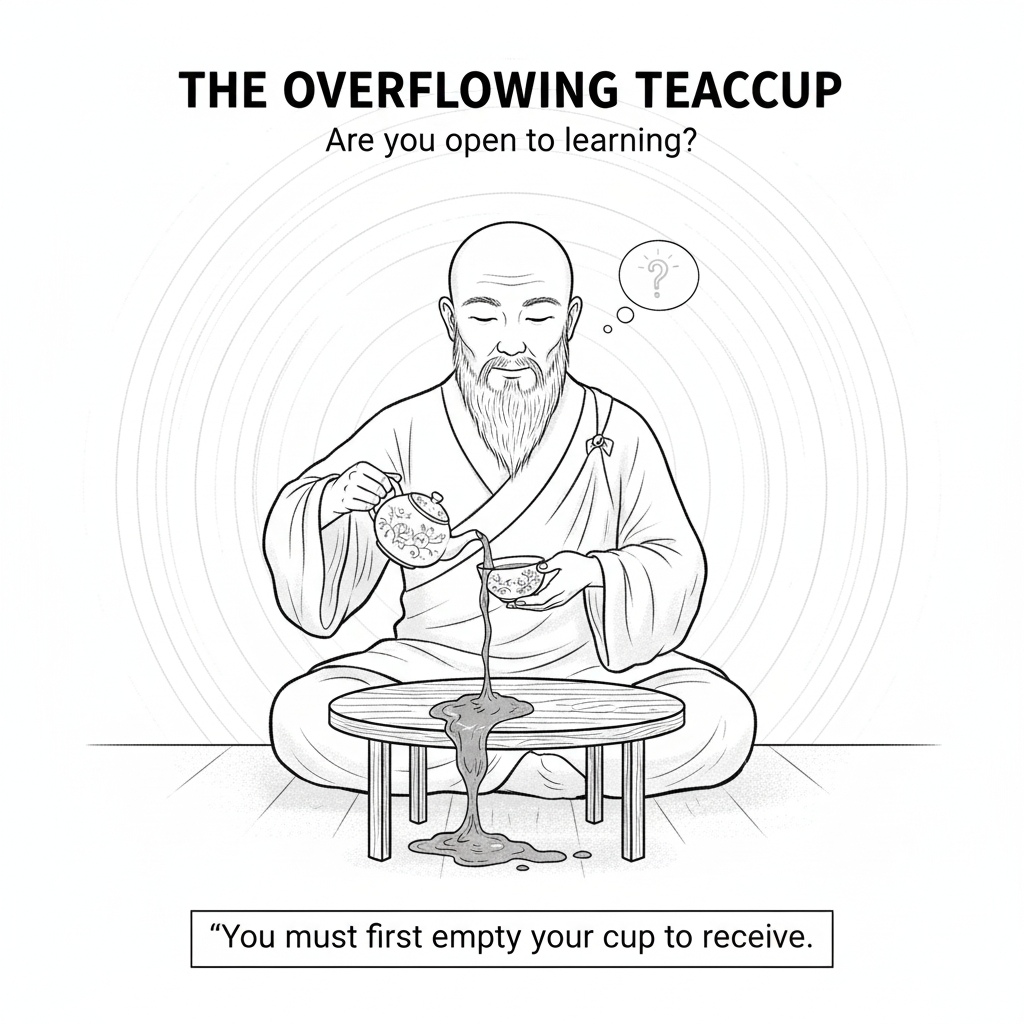
A man once went to a Zen master seeking enlightenment. He kept talking about everything he knew and had learned. He spoke about scriptures and spiritual practices. The master asked him to have a seat and began to pour tea into his cup. He kept pouring even after the cup was full. The tea spilled over the edges and onto the table. Startled, the man cried, “Stop! The cup is full!”
The master smiled and said, “Exactly. How can I fill your cup when it’s already full?”
Our minds are often like that cup. Overflowing with knowledge, noise, and unfinished thoughts. We seek clarity, but our inner space is already occupied. In that state, even the most profound ideas have nowhere to land.
Lao Tzu once wrote, “We shape clay into a pot, but it is the emptiness inside that holds whatever we want.” Emptiness is not absence. It is capacity, the space that allows something new to take shape. When we stop trying too hard to think, something remarkable happens. The mind begins to work on its own. Ideas we had been chasing suddenly come looking for us.
Science calls this the mind’s resting state, but in truth, it is anything but rest. It is when the mind joins loose ends, finds patterns, and brings forward thoughts that were waiting beneath the surface.
Think of the moments when your best ideas appear. These could be in the shower, on a quiet morning drive, during a walk when you least expect them. That’s the mind speaking in its natural rhythm, without being crowded or commanded. I wrote about this in The No Instruction Manual to Productivity, how breakthroughs often come when we stop giving our minds instructions and simply let them breathe.
There is a saying that goes, “Don’t just stand there, do something.” But there’s another one I love even more: “Don’t just do something, stand there.” This one captures the heart of this reflection. When we pause, when we allow emptiness, we aren’t wasting time. We are giving our thoughts space.
Practicing Emptiness: Creating Space in a Noisy World
We live in a world that never stops speaking. There’s always another message, another meeting, another piece of advice telling us what to do next. In all that noise, the quiet voice inside us fades away. Yet that is the very voice from where our best ideas come. Emptiness doesn’t mean walking away from life or becoming detached. It means pausing long enough to listen, to notice, to let your mind breathe again.
Sometimes this pause is as simple as sitting with your morning tea without reaching for the phone. Or taking a walk without music in your ears. Or spending a few minutes looking at the sky before you start the day.
When we stop filling every moment, something unexpected happens. The mind, which was running in circles, begins to settle. Thoughts arrange themselves. New ones appear from nowhere. What felt confusing begins to make quiet sense.
Artists, writers, and musicians know this well. They use emptiness intentionally. The pause between two notes makes the melody beautiful. The white space on a canvas brings balance to color. The blank page is not intimidating once you realize it’s the birthplace of everything that will come alive on it. Emptiness, when used with intent, becomes a form of design.
From Emptiness to Creation
Every act of creation follows a rhythm. Empty, observe, create, and empty again. Like breathing out before breathing in, emptiness is the exhale that makes creation possible. It is not something we practice once; it’s a cycle we return to again and again.
This also connects deeply to what I wrote in The Cat That Burnt Its Tongue. In that story, the cat was hesitant to drink milk again after being hurt once. We are not very different from that. Our past experiences often fill us with fear, assumptions, and cautiousness. We sip carefully from life, shaped by old burns. Emptiness gives us a fresh cup, free from yesterday’s residue. It clears the space so that life can be tasted anew.
When we let go of what we think we already know, we open the door for what we have yet to learn. When we stop clinging to how things should be, we start noticing how they are. And that awareness becomes the seed of creation.
The Empty Cup and the Full Life
The Zen master’s lesson still holds true in our modern lives. A full cup can’t take more tea, and a crowded mind can’t receive what life is trying to offer.
We spend so much of our time trying to fill ourselves with plans, goals, and constant activity, believing that more is always better. But creation doesn’t come from what we add. It comes from what we allow.
Emptiness isn’t the end of thought. It’s the clearing before the seed takes root. Every masterpiece begins with a blank page. Every symphony begins with silence. Every invention begins with an unanswered question.
So the next time you find yourself chasing inspiration, pause instead. Let the noise fade. Don’t rush to fill the space. Stay there for a moment longer. You may just hear the first whispers of your next creation.