A few days back, I attended an evening get-together where a group of people were preparing for professional certifications. It wasn’t a typical training session. This one was about exploring the leadership potential in each of us.
The mentors spoke to the students as if they had already cleared their exams. The energy in the room carried an unusual certainty. It was as though everyone there had already become what they were working toward.
It was fascinating to watch the charged atmosphere. People began to respond like the leaders they were expected to be. Their tone grew more assured, their expressions lighter. One woman, who had struggled earlier to find her words and speak. Someone gently reminded her, “You are already a leader. You’ve cleared your certification.” Almost instantly, her posture lifted and her voice steadied. When she spoke, she was on song.
That simple reminder transformed how she showed up in that moment. It wasn’t a trick or a motivational push. It was a reflection of belief, someone saw her as already capable and she began to act that way. And as I watched, I was reminded of the old Greek story of Pygmalion.
The Sculptor and His Belief
In ancient Greece, Pygmalion was a renowned sculptor, who longed for beauty and perfection. He carved a statue of a woman so lifelike that he fell in love with it. Every day he returned to it, polishing, admiring, and believing in its existence as something more than stone. His devotion was so complete that the gods, moved by his faith, brought the statue to life.
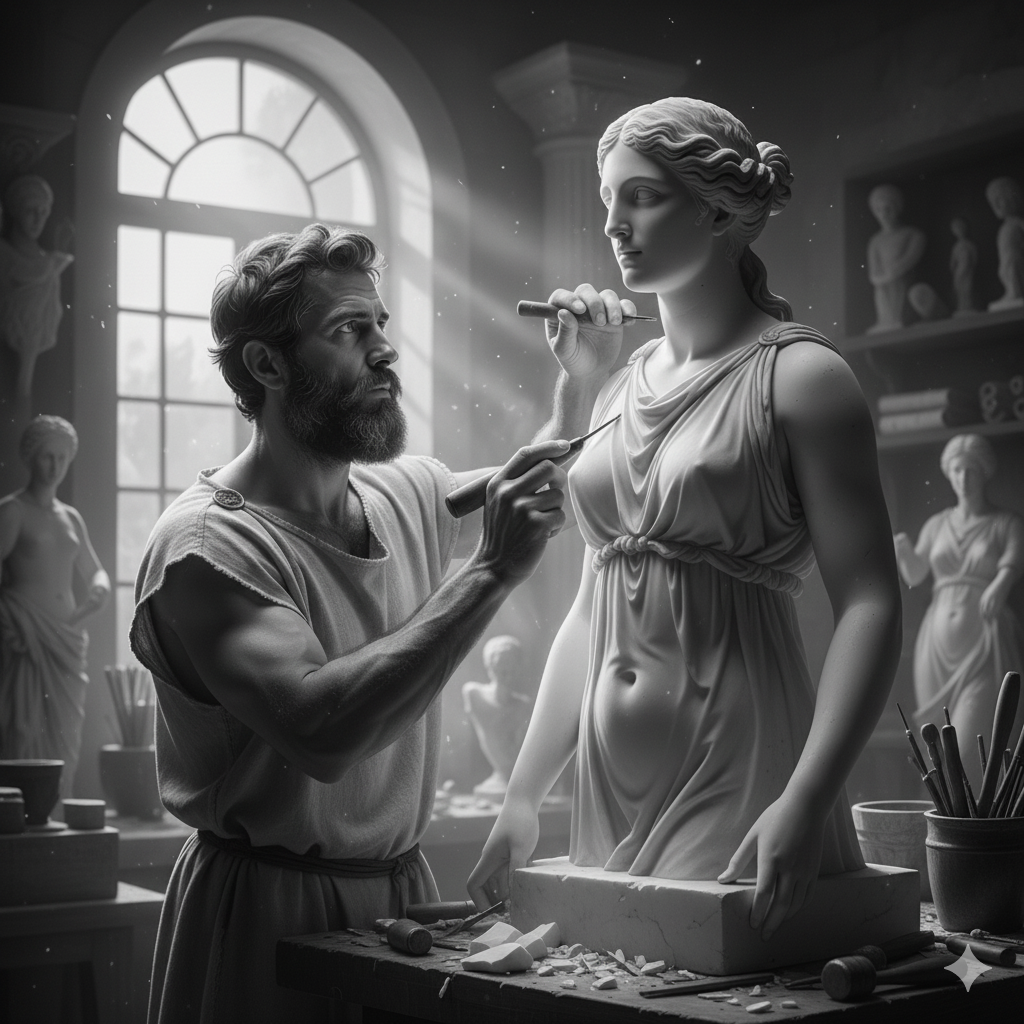
What began as marble became real. That story, ancient as it is, holds a truth that still breathes quietly in our lives. The way we see others often shapes what they can become. Lets see how this applies in our lives and how we can use it for our benefit.
Expectation as a Mirror
We may not sculpt marble, but we are all shaping one another through the way we see, speak, and listen. Our tone, our attention, and our expectations become mirrors that people look into.
When we believe someone is capable, they begin to act that way. When we see them as creative, intelligent, or kind, they start stepping into that version of themselves. When we view them through doubt or indifference, their light dims to match it.
Psychologists call this the Pygmalion Effect, our expectations influence our behavior toward others, which in turn shapes their behavior toward us. Over time, they begin to reflect back the version that we imagined first.
Pygmalion Effect in the workplace
We can see this play out everyday at work. A manager who expects excellence from their team often brings out results that surprise even the team itself. The tone of expectation changes the way people show up. They take ownership, share ideas more freely. However when doubt and micromanagement fill the air, even capable people start to shrink. They begin to question themselves, second-guess their choices and do just enough to survive.
Expectation works like the climate, it sets the temperature in every room we walk into.
In Design your environment, shape your productivity, I wrote about how our surroundings shape what we do. Expectations are a part of that environment too. Powerfully shaping how people think, act and grow.
How We Listen Shapes Who They Become
Listening is one of the most powerful tools at our disposal. To truly listen to someone is to tell them, “Your thoughts have weight.” When we listen with curiosity instead of judgment, we draw out their best self.
In workplaces, this can show up as trust. In relationships, as understanding.
The way we listen changes the way people speak. The way we see them changes how they see themselves. It can begin with quiet attention and faith that the other person will rise to the space we make for them.
Closing Reflection
We are all sculptors in subtle ways. Every conversation, every word, every moment of belief or doubt quietly shapes the people around us.
The story of Pygmalion reminds us how to bring the possibility into life. What we expect, encourage, listen to can truly shape the world around us.
So the next time you speak to someone, see them not just as they are but as they could be. Believe in them a little more than they believe in themselves.
Because what we see in others, we help them become.