How Context Shapes Everything that follows
There is a story that feels almost unbelievable at first. You read it once, think it is an amusing historical coincidence, and move on. Its when you pause and look again, something deeper appears. The story becomes a mirror that shows how our world grows, how our choices ripple through time, and how even the most advanced technologies are tied to forgotten decisions made by people long gone.
I first came across this beautifully told story through Kevin Kelly’s article. The more you think about it, the more it reveals.
The story begins in ancient Rome. Their war chariots had a specific width, shaped by the size of the horses pulling them. Roads across the empire were built to match this. When Rome marched into Britain, the same width followed. When the English built tramways centuries later, they kept that width so horse carriages could move on the same tracks. When railways arrived, the rails were placed at the same distance. When early American rail builders began their work, they simply carried forward the same measurements used in Britain.
Then comes the part that makes the whole story surprising.
The solid rocket boosters of the Space Shuttle, one of humanity’s most complex engineering achievements, had to be sized to fit through a narrow railway tunnel. Those tunnels were built around the standard rail gauge, which came from the old tramways. The tramways had inherited their spacing from horse-drawn carriages, and those carriages were shaped by the width of Roman chariots. In the end, a key design element of one of the most advanced machines ever built was influenced by a measurement set more than two thousand years ago. It is a striking example of how technology carries its past forward and how old constraints shape new futures.
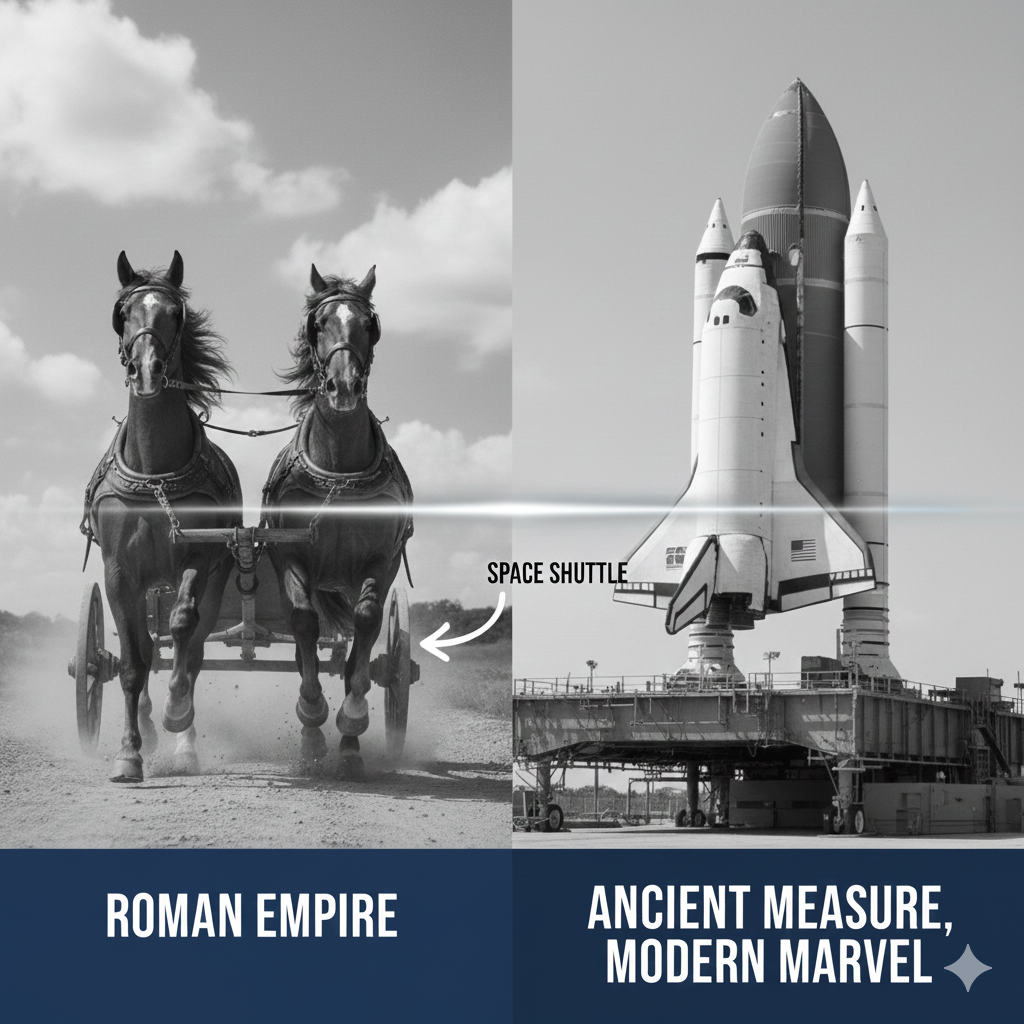
The Shape of Our World
This story is a reminder of how our lives work. Nothing stands alone. Every idea sits on something older. Every system inherits the thoughts, fears and compromises of the people who came before us. Without noticing, we end up living inside boundaries we never questioned.
Context shapes what we consider possible. It tells us what feels safe, what feels normal and what we assume will work. Many of these patterns had a purpose when they were created. They made sense for that world. But they continue long after the world has moved on.
Roman roads made travel easier. Railways needed consistency. Rockets needed transport routes. But what happens when the context no longer serves the future and only protects the past?
When Yesterday Defines Tomorrow
In our own lives, we fall into the same trap. We build habits around old experiences. We carry fears shaped by childhood. We treat our limits as permanent because they feel familiar. Without realizing it, we carry forward limits that no longer match the life we are living today.
Just as technology and progress inherits constraints from its predecessors, we inherit constraints from ours. Some were born out of survival. Some were created out of convenience. Some are simply outdated ideas carried too far. The question is not whether these constraints exist. They do. The question is whether we can see them. Once we see them, we gain the ability to choose.
Breaking the Hidden Limits
To break old limitations, we do not need to reject everything we inherited. We only need to understand the context that created those boundaries. Here are three starting points.
1. Notice the source
Ask yourself why you do something a certain way. Why you avoid a task. Why you hesitate when an opportunity appears. Why you repeat old habits. Many times the answer is not a real limitation. It is simply a Roman road you have been following without question.
2. Check if the context still exists
A belief created in fear often continues long after the fear has passed. A habit formed in scarcity can remain even in abundance. A rule shaped by childhood can still guide an adult life. Does this context still serve you today? Or is it a memory from another time?
3. Build a new path deliberately
You do not have to change everything at once. You only need to build one new track that fits the life you are living now. A new routine. A new conversation. A new way of working. Slowly, the old tunnel becomes irrelevant.
Albert Einstein said something similar. “We cannot solve our problems with the same thinking we used when we created them.” Old thinking built old roads. Old thinking created old limits. New challenges need new ways of seeing. The world changes when we do.
The Freedom of Fresh Roads
The Space Shuttle was built inside that old constraint and continued its journey anyway. Imagine what else we could build if we questioned such constraints earlier. Imagine asking yourself: What if this is not the only way? What if the world can be shaped differently? What if I do not have to carry this forward?
We are not trapped by history. We can choose to be shaped by it. When we become aware of the this, we have the freedom to shape the future the way we want. Technology, Civilizations can be reshaped when we become aware of the choice.
Our choices today become the tunnels and tracks of tomorrow. We can carry forward old measurements without thinking, or we can create new ones consciously. Context explains where we came from. Awareness decides where we go next.
Context shapes us, but it does not seal our fate. The moment we see the old patterns clearly, new possibilities step forward on their own.
Comments
One response to “When the Past Designs the Future: A Story About Context”
Thinking about affiliate marketing? Give sekabetaffiliates a look. Their platform is pretty user-friendly as well as reliable. Has great potential!