(This is part 2 of Begin with the end in mind blog, link follows below in the article)
How starting from the finish line brings clarity to every step ahead
Imagine starting every project by writing the headline for a press release announcing its success before you build a single feature.
This is the essence of Amazon’s Working Backwards method, an approach that flips traditional product development on its head by focusing on customer benefits first. By visualizing the end goal and working in reverse, teams avoid wasted effort, align on a shared vision, and innovate with purpose.
It’s a simple mindset, but it changes everything. Instead of asking what should we build, you begin with what would success look like if we got this right.
The Inner Beginning
Long before companies used frameworks like this, Stephen Covey spoke of something far more personal in the book, The 7 Habits of Highly Effective People.
He asked readers to pause and imagine something deeply human.
“Imagine five years from now, you’re attending a funeral. The room is filled with friends, family, and colleagues — faces you know and love. You walk toward the front, and as you look into the casket, you realize it’s your own funeral.”
Covey then invites you to listen. What would your loved ones say about you? What kind of life would they describe? What impact would you have left behind?
That exercise captures the true essence of beginning with the end in mind. It isn’t just about goals or checklists but about living and working with purpose. Once you’re clear about how you want to be remembered, every decision in the present starts to align with that vision.
The earlier blog post discussed this in length. In case you haven’t read The Sculptor’s Secret, you might enjoy starting there, The Sculptor’s Secret: Begin with the End in Mind. It’s a story about how clarity in vision gives birth to creation, and how seeing the vision before we start to work, how the sculptor saw the statue within the stone and made every strike to the stone meaningful.
The same spirit carries into working backwards. Whether designing a product or shaping a personal goal, the principle is the same: see the end clearly, then shape the path that leads there.
From Vision to Blueprint
Once the end picture is clear, the real work begins. Trace the steps in reverse until you reach where you stand today. This is how vision becomes a plan.
Amazon teams use this process not as a ritual but as a discipline. They start by imagining the customer’s delight, then ask what needs to exist for that delight to be real. Only then do they begin designing features or writing code.
You can apply the same idea to your goals. Picture the outcome as already achieved, then ask what had to happen just before it, and before that, until you arrive at today.
Why It Works
Traditional planning starts from the present and assumes we will know the way. Working backwards starts from the future and lets clarity reveal the path.
This shift brings a few powerful benefits. It removes guesswork. You focus only on steps that matter to the end goal. It aligns effort. Every task connects to a clear purpose instead of a checklist. It builds conviction. When you’ve already seen the finish line, the obstacles lose some of their weight.
Studies on backward goal-setting show that people who plan this way stay more motivated because they are guided by vision, not urgency. Each step feels part of something meaningful.
How to Practice It
You don’t need a corporate roadmap to use this approach. Try this simple process:
- Define the outcome. Describe your goal as if it’s already achieved.
- Step backward. Ask what must have happened right before that. Keep going until you reach today.
- Flip the order. This becomes your forward plan.
- Take the first step. Begin with what’s right in front of you, knowing it connects to the larger picture.
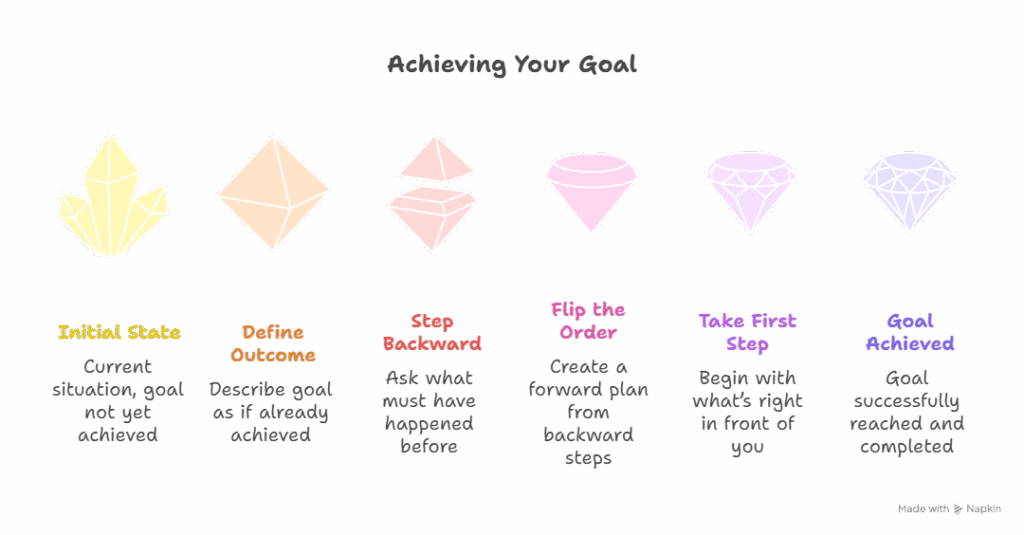
This can be a disciplined way to turn uncertainty into progress.
Reflection
Both life and work reward those who can see the ending first.
If your dream were already real, what would the last few steps have looked like? What would you be doing in the days leading up to it?
Start there.